
What are the Proofs of Innocent Spouse Relief?
Legal Guide: Understanding Innocent Spouse Relief Requirements
What are the proofs of innocent spouse relief that the IRS evaluates? When you file a joint tax return, both spouses become jointly and severally liable for the entire tax debt—even if only one spouse caused the problem. Innocent spouse relief protects taxpayers from their spouse’s tax errors, fraud, or unpaid liabilities. According to IRS data, approximately 50,000 taxpayers apply for innocent spouse relief annually, yet many applications fail due to insufficient documentation. Understanding exactly what evidence the IRS requires helps you present a complete request for relief and address the IRS factors considered during review.
Key Evidence Documents Required
Financial Records and Tax Documentation
The IRS examines your financial involvement in household finances and tax preparation. You must provide copies of joint tax returns showing the understatement or unpaid tax, bank account statements proving lack of access to marital funds, and credit card records demonstrating financial separation. Pay stubs, income records, and expenditure logs help establish whether you benefited from the unreported income or unpaid taxes. If your spouse owned a business or had complex investments, evidence showing you had no involvement in these activities strengthens your claim significantly.
Proof of Knowledge and Participation
What are the proofs of innocent spouse relief regarding your awareness of tax problems? The IRS must determine whether you knew or had reason to know about the tax understatement. Helpful evidence includes testimony from tax preparers confirming you weren’t present during preparation discussions, emails or letters showing your spouse concealed financial information, and documented instances where you questioned tax return accuracy. Educational background and work experience matter—the IRS considers whether someone with your level of sophistication should have detected the errors. According to IRS guidelines, you must prove you had no knowledge of the understatement when signing the return.
Documentation of Duress or Abuse
For taxpayers who signed returns under pressure, proving duress requires substantial evidence. Police reports documenting domestic violence, restraining orders, medical records showing injuries, and witness testimony from family members or counselors all support claims of coercion. Photographs, 911 call records, and shelter admission documents provide compelling proof. Even without physical abuse, financial control evidence—like restricted access to money, monitoring of spending, or threats of economic harm—can demonstrate duress. Text messages, voicemails, or emails containing threats strengthen your innocent spouse relief application considerably.
Separation and Financial Independence Evidence
Demonstrating Lack of Household Unity
What are the proofs of innocent spouse relief when claiming separation? The IRS considers separation from a spouse as one of several factors when evaluating a relief request. Lease agreements showing separate addresses, utility bills in your name only, and divorce decrees or legal separation documents provide clear proof. School records showing children’s addresses, employment records with your current address, and affidavits from landlords or neighbors confirming you live separately all support your claim. The IRS requires proof you haven’t been a member of the same household for at least 12 months before filing Form 8857.
Financial Hardship Documentation
Proving that paying the tax debt would cause economic hardship requires detailed financial disclosure. Submit current income statements, monthly expense records, medical bills for ongoing conditions, and evidence of dependents relying on your support. Bank statements showing minimal savings, retirement account balances, and assets help establish your financial situation. Documentation of existing debts, student loans, or other obligations demonstrates that paying your spouse’s tax liability would leave you unable to meet basic living expenses. The IRS considers whether collection would prevent you from maintaining reasonable housing, food, and medical care.
Supporting Testimony and Correspondence
Beyond documents, witness testimony provides crucial support for innocent spouse relief claims. Affidavits from family members, friends, or professionals who witnessed your lack of financial involvement or your spouse’s deception add credibility. Tax attorney representation often includes professional assessment of your situation and formal arguments supporting your claim. Any IRS correspondence showing audit findings, penalty assessments, or collection notices should be included. If your spouse communicated about tax issues through emails or texts that excluded you, these prove your lack of knowledge. Character references from employers, community members, or religious leaders can support claims of trustworthiness and honest belief in return accuracy.
Building Your Strongest Case
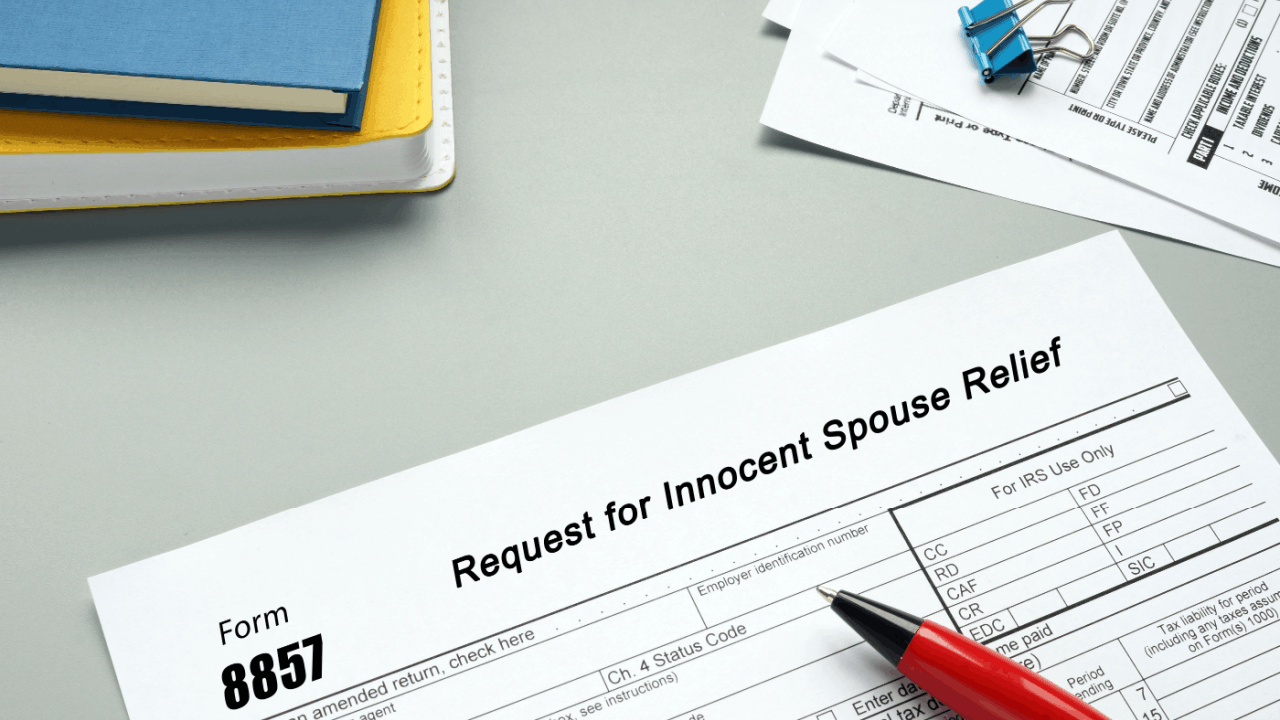
What are the proofs of innocent spouse relief the IRS evaluates? Applications typically include comprehensive financial documentation, evidence of non-participation in tax preparation, proof of separation or duress, and detailed financial hardship information. The IRS evaluates relief requests using Revenue Procedure 2013-34 criteria, weighing factors like abuse, knowledge, benefit from understatement, and current financial status. Gathering thorough evidence before filing Form 8857 helps the IRS evaluate your request under the applicable criteria.
Free Innocent Spouse Relief Case Review
What are the proofs of innocent spouse relief you need for your specific situation? Every case requires customized evidence strategy based on your unique circumstances. Request a free tax case review to evaluate your documentation and strengthen your innocent spouse relief claim. Tax attorneys specializing in IRS innocent spouse relief can identify missing evidence and present your case effectively to the IRS.
For Attorneys: Help taxpayers navigate innocent spouse relief documentation requirements. Sign up here to connect with clients needing expert representation.
Frequently Asked Questions
1. What documents do I need to prove innocent spouse relief?
You need joint tax returns, financial records proving non-involvement, separation documentation, evidence of duress or abuse if applicable, and detailed financial hardship information showing your current economic situation.
2. How does the IRS verify I didn't know about tax problems?
The IRS reviews your education level, financial involvement, tax preparation participation, access to financial records, and any evidence your spouse concealed information when determining your knowledge of understatements.
3. Can I get innocent spouse relief if I'm still married?
Yes, but it’s more difficult. You must prove you didn’t know about the tax problem and either face financial hardship or meet other qualifying factors under IRS Revenue Procedure 2013-34.
4. What is considered sufficient proof of financial hardship?
Financial hardship proof includes income statements, expense records, medical bills, dependent care costs, existing debt obligations, and evidence that paying the tax would prevent basic living needs.
5. How long do I have to file for innocent spouse relief?
You must generally file Form 8857 within two years of the first IRS collection attempt, though equitable relief requests may have different timeframes depending on your circumstances.
Key Takeaways
- Innocent spouse relief requires documented proof of non-knowledge, separation, duress, or financial hardship to qualify for protection from joint tax liability.
- Essential evidence includes financial records, tax returns, correspondence, separation documents, and testimony proving lack of participation in tax errors.
- The IRS evaluates multiple factors under Revenue Procedure 2013-34, making comprehensive documentation critical for approval success.
- Proving financial hardship requires detailed disclosure of income, expenses, assets, and obligations showing inability to pay without severe economic consequences.
- Professional tax attorney guidance helps identify necessary evidence and present the strongest possible innocent spouse relief case to the IRS.


Free Tax Case Review
If you are struggling with tax debt or have received a letter from the IRS complete the form below.
Attorney Advertising. This site is a legal marketing service and does not provide legal advice. Submitting information does not create an attorney-client relationship. Results are not guaranteed.
IRS Audit
You received an audit notice from the IRS
Tax Debt Relief
You owe the IRS money and are looking for relief options
Wage Garnishment
The IRS is taking part of your wages to pay off your debt
Tax Lien
The IRS put a legal claim on your property
IRS Property Seizure
The IRS is going to take your property to pay down or pay off your tax debt
Penalty Abatement
You want to request to remove or reduce penalties assessed by IRS
Innocent Spouse Relief
Relief from joint tax debt caused by your spouse or former spouse
Tax Debt FAQ
Common facts, questions and answers about tax debt and tax debt reilef
Tax Debt Lawyer
A tax debt lawyer can help you with your tax debt problems
Recent Posts
- What are the Proofs of Innocent Spouse Relief?
- What Form Do You Use for an Innocent Spouse? | Complete IRS Filing Guide
- What Are the Four Types of Innocent Spouse Relief? | Your Complete Guide
- What Are the Four Types of Innocent Spouse Relief Forms | Complete IRS Documentation Guide
- Who Is Responsible for IRS Debt in a Divorce? | Understanding IRS Tax Liability After Divorce